
The Explosion of Nomad Visas: From Fringe Experiment to Mainstream Game
Five years ago, digital nomad visas were a novelty. Estonia had one. Portugal was experimenting. Everyone else was still figuring out what to do with remote workers who weren’t quite tourists, weren’t quite expats, and definitely weren’t going to get traditional work visas. Now we’re in 2026 and the landscape has shifted dramatically. Over 65 countries have launched formal digital nomad or remote worker visa programs, turning what was once a creative loophole into an actual category of legal residence. The infrastructure exists now. The question isn’t whether these visas are available anymore. It’s whether they’re actually worth your time and money.
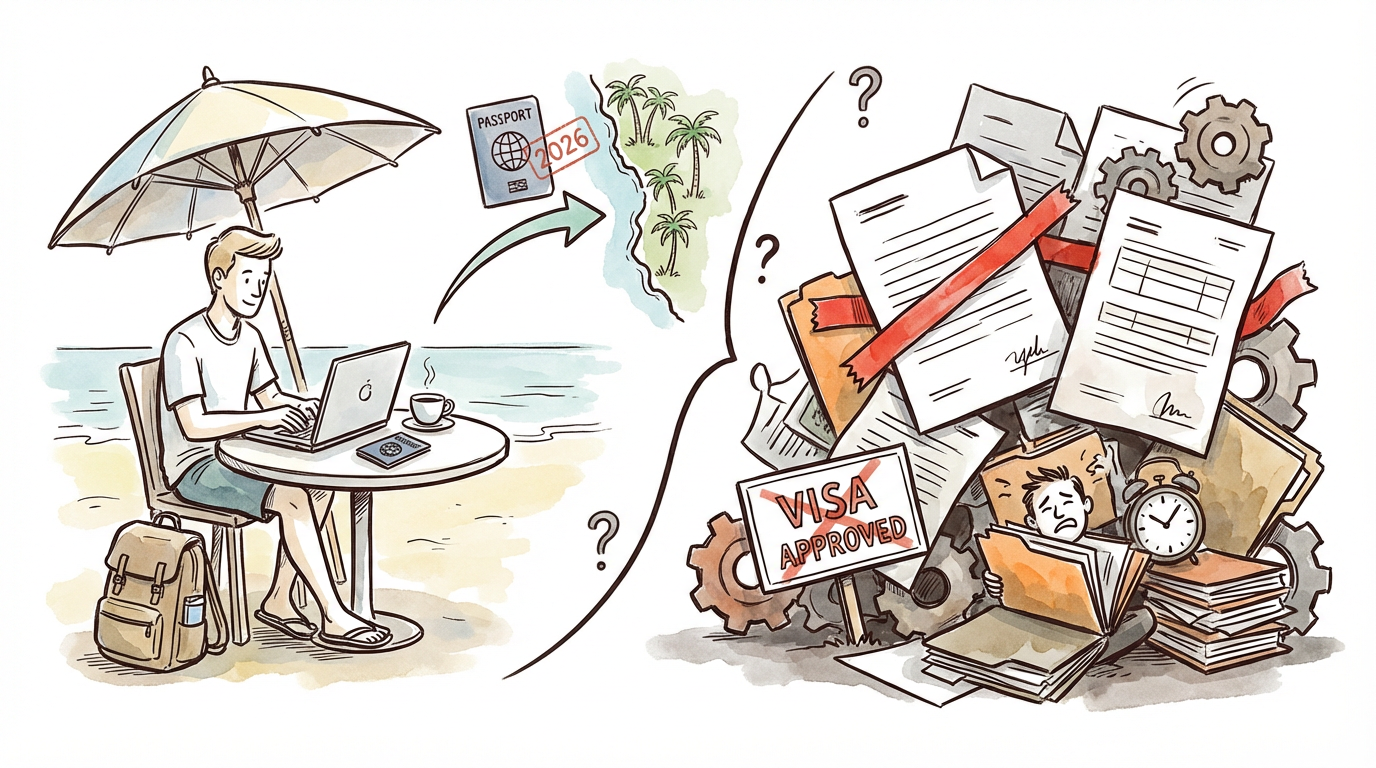
The jump from five countries to sixty-five in roughly seven years tells you something important: governments finally realized they could monetize the digital nomad trend while improving their balance sheets and attracting young professionals with spending power. Some have done this thoughtfully. Others clearly copied a template, collected their fees, and hoped nobody would ask too many questions about the actual logistics. I’ve watched this space from my notebook for years. I’ve talked to hundreds of people trying to navigate these systems. The honest answer is that some countries genuinely deliver. Others will drain your patience along with your bank account.

Thailand’s LTR Visa: The Oversubscribed Success Story
Thailand’s Long-Term Resident Visa, which launched in September 2023, has become the gold standard for what a nomad visa should actually accomplish. The top tier requires proof of $80,000 in annual remote income, and the Thai Board of Investment processed over 14,000 applications in 2025 alone. That number matters. It’s not a vanity metric. It means the system has been tested at scale, and there’s institutional knowledge among both Thai officials and the nomad community about what works and what doesn’t.
I spent six weeks in Bangkok last year meeting people at various stages of the LTR application process. What struck me wasn’t the bureaucracy, though it exists. It was the efficiency. The Thai government actually seems to want these visas to work. Your documentation has to be solid, and they will scrutinize your income proof, but the process is transparent. You know what you need. You submit it. You get an answer. No magical thinking required. The visa comes with a 10-year validity period, which means if you’re serious about staying in Southeast Asia, you can build something resembling actual stability.
The real limitation isn’t the visa itself. It’s the income requirement. Eighty thousand dollars annually is real money, even for successful freelancers. Not impossible, but the MBO Partners State of Independence report found that 18.1 million Americans self-identified as digital nomads in 2025, a 131% increase since 2019, and not all 18 million earn that threshold. If you’re making $40,000 a year doing contract design work or copywriting, Thailand’s upper tiers are simply out of reach. The lower tiers exist, but they’re more restrictive. Still, when it works, it works better than almost anywhere else.
Portugal’s D8 Visa: Beautiful Country, Frustrating Execution
Portugal’s D8 Digital Nomad Visa is the visa you want to like. The country is gorgeous. The cost of living is reasonable. The food is honest. The people are generally welcoming. The visa itself seems simple on paper: earn at least four times Portugal’s minimum wage. As of January 2026, that works out to approximately €3,480 per month. For many freelancers, that’s achievable. But here’s where things get sticky.
The visa was designed for Europeans first and has been retrofitted to make sense for everyone else. The bureaucratic gaps are real. Income verification looks different depending on whether you’re self-employed, a freelancer, or running a company. Some consulates interpret the requirements loosely. Others demand documentation so extensive you might as well be moving to Portugal permanently. Processing times are genuinely unpredictable. I know people who got approved in six weeks and people who waited four months for basic clarifications.
What nobody tells you before you apply is that Portugal’s visa administration is decentralized. Your experience depends heavily on which consulate handles your application. The Lisbon consulate, from what I’ve heard consistently, seems to have their act together. The regional ones are wildly inconsistent. If you’re already in Portugal on another visa status, renewal is simpler. If you’re applying from abroad, budget extra time and assume nothing about the timeline. The minimum wage requirement was also adjusted in 2024, so the goalposts moved for existing visa holders. Not a deal-breaker, but a reminder that even seemingly straightforward visas can shift under your feet.
Indonesia’s Second Home Visa: High Barrier, Limiting Practicality
Indonesia’s Second Home Visa gets lumped into nomad visa discussions constantly, but it’s not really a nomad visa. It’s a long-term tourism and residence visa that happens to be useful for remote workers. The distinction matters because it shapes everything about the experience. You can legally stay for 10 years, and the visa does allow remote work. But the entry requirement is brutal: you need to deposit $130,000 into an Indonesian bank account.
That’s not a suggestion. That’s not a flexible guideline. It’s a hard requirement enforced by immigration officials. The deposit is supposed to demonstrate financial stability. In theory, it’s secure. In practice, it’s a staggering barrier. For most freelancers and even many successful remote workers, committing that much capital to Indonesia’s banking system just to stay isn’t feasible. The recent cohort showed a 40% renewal rate among early applicants, which tells you that people who could afford it were happy enough to continue. But the pool of people who could afford it in the first place was tiny.
I talked to a freelancer from New Zealand who did it. She had legitimate reasons: she was already splitting her year between Indonesia and Australia, she had savings to deploy, and she wanted certainty. For her, it worked. But I also talked to dozens of people who looked at that $130,000 requirement and went to Thailand instead. The Second Home Visa isn’t a failure. It’s just a different product, designed for people with capital, and it shouldn’t be presented as an alternative to standard nomad visas. If you’re an independent worker earning $30,000 to $50,000 annually, this one isn’t for you.
The Real Landscape: Your Decision Tree Actually Matters
The proliferation of nomad visas is genuinely useful. The flexibility is real. But the marketing around these programs often obscures important details. Check the Nomad List real-time digital nomad visa tracker before you commit to any research rabbit hole, and update your understanding every few months because these programs shift. Income requirements change. Processing times expand or contract. Consulates add new documentation demands.
The countries that deliver tend to share certain traits: clear income requirements posted in English, transparent processing times, centralized administration, and a government that actually seems interested in the program’s success rather than just the revenue stream. Thailand delivers. Portugal mostly delivers, depending on your consulate. Mexico’s Temporal Resident visa is stable if you meet the income threshold. Georgia’s visa is admirably simple. Spain’s non-lucrative visa exists but has its own complications.
The countries that frustrate tend to share the opposite: vague income requirements, inconsistent document interpretation, split administration between agencies, and the sense that they’re still figuring this out. I won’t name them all because the situation changes, but you’ll recognize them by the Slack channels full of people asking “has anyone gotten any update yet?” after waiting six months.
The real question isn’t which visa is best. It’s which visa fits your specific life. Your income level. Your risk tolerance for bureaucratic uncertainty. Your actual plans for how long you’ll stay. Your financial flexibility if something goes wrong. Those variables matter more than the visa program itself. What has your experience been with long-term visas? Drop a note in the comments about which countries actually came through for you, and which ones humbled you with their inefficiency.