
A Story With Roots Most Coverage Forgets
Understanding where we are today requires knowing where we came from, and this particular story has roots that most coverage conveniently forgets. AI writing tools did not arrive fully formed as polished productivity suites aimed at bestselling novelists. They grew from communities of hobbyists, fan fiction writers, and interactive fiction enthusiasts who wanted something the mainstream market refused to build. That origin shapes everything about how these tools compete, diverge, and occasionally overlap in 2025 and into 2026.

Let’s work through this together, step by step. The conventional take on this is incomplete — and the gap matters.
Three platforms now define distinct corners of this space. NovelAI built its reputation on creative freedom and has since expanded aggressively into image generation. Sudowrite made a deliberate pivot toward professional authors seeking structured support for long-form work. SillyTavern carved out a devoted following among users who want deep customization and character-driven roleplay. None of them are trying to be the same thing, and understanding those differences matters enormously before choosing where to invest your time and money.
NovelAI: From Text Generation to Visual Storytelling
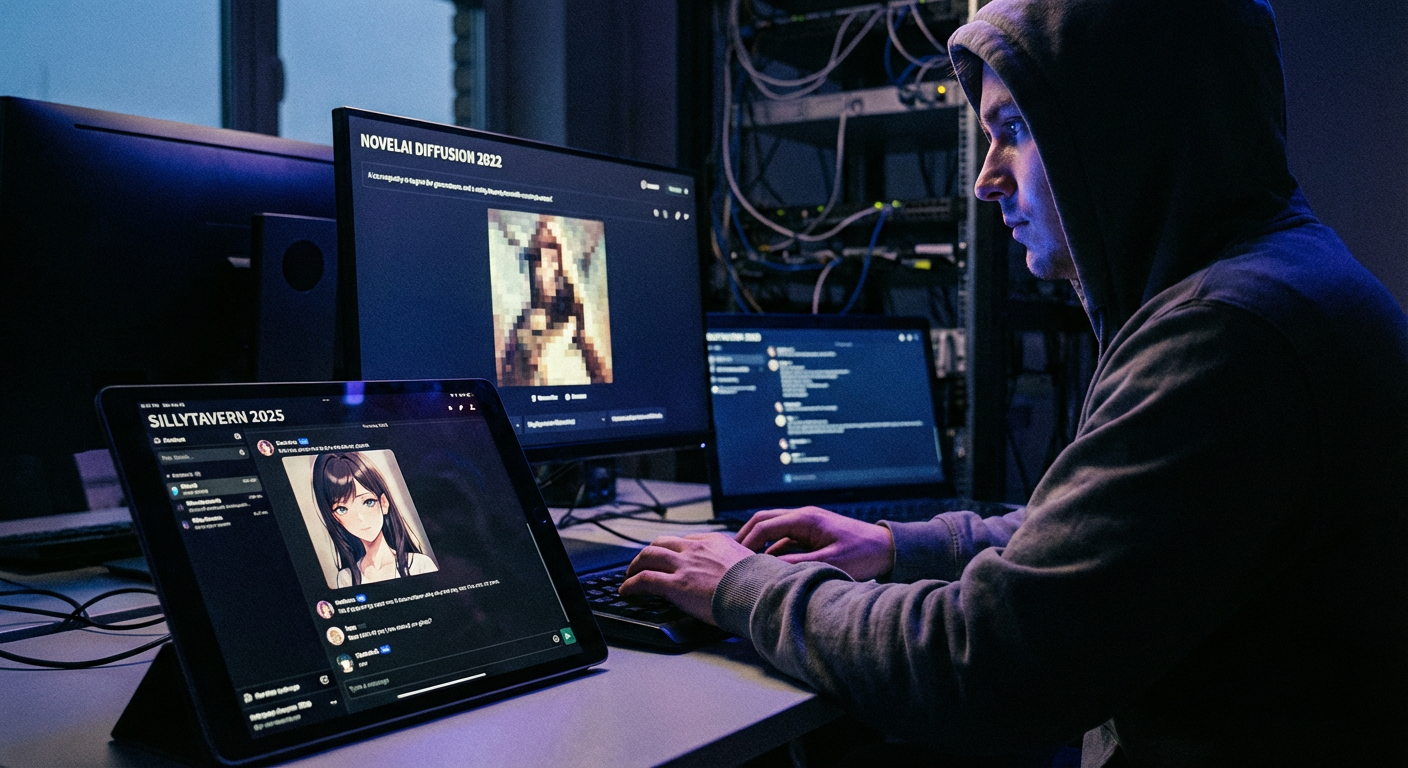
NovelAI began as a text-focused platform, but launching image generation in 2022 changed its trajectory entirely. What started as a supplementary feature grew into one of the platform’s most distinctive offerings. By 2025, the team had trained specialized models built specifically for anime-style illustration, a choice that aligned precisely with the aesthetic preferences of their core community. Those models did not stay locked inside NovelAI’s own interface for long.
The SillyTavern community quickly recognized the potential. Through API integration, users began pulling NovelAI-generated character portraits directly into their chat sessions, creating something closer to an interactive visual novel than a traditional text exchange. The NovelAI Official Site now serves users who want both expressive prose generation and consistent character visuals in a single workflow, even when those visuals are being rendered inside a third-party interface.
Pricing plays a significant role in NovelAI’s broad appeal. Subscription access starts at ten dollars per month as of 2025, which positions the platform as an accessible entry point for writers and hobbyists who are not yet ready to commit to higher-cost alternatives. That affordability has kept adoption strong across the hobbyist and fan fiction communities that originally made the platform what it is.
Sudowrite: The Professional Author’s Bet
Sudowrite made a different calculation entirely. Rather than chasing the roleplay and interactive fiction audience, the platform leaned into the needs of working writers with serious long-form projects. The 2024 launch of its Story Engine feature signaled that ambition clearly. Story Engine was designed to help authors manage structure, pacing, and narrative coherence across full-length manuscripts, not just individual scenes or short exchanges. This was tooling built for people writing novels, not chat sessions.
That professional positioning comes with a higher price point. Entry-level access to Sudowrite AI Writing Tool sits at nineteen dollars per month, nearly double NovelAI’s starting tier. That gap is not accidental. It reflects a conscious decision to target authors who treat their writing as a professional endeavor and who expect tools built to match that seriousness. The community around Sudowrite skews toward people working on manuscripts they intend to publish, which creates a very different user culture from the one that gravitates toward NovelAI or SillyTavern.
The tradeoff is real. Sudowrite offers relatively limited customization compared to SillyTavern, and it has no meaningful image generation capability. For authors who simply want help drafting, revising, and structuring a novel, those absences barely register. For users who want to build elaborate character-driven interactive experiences, Sudowrite is simply the wrong tool for the job. The platform is honest about that, which is part of why its user base trusts it.
SillyTavern: The Extensible Community Platform
SillyTavern operates on a different logic than either of its counterparts. It is not primarily a writing tool in the conventional sense. It is a frontend interface that allows users to connect to a wide range of AI language model backends and shape those interactions through extensive customization. Character cards, persona management, and conversation-style roleplay are its native environment. The platform does not try to write your novel for you. It tries to become whatever collaborative storytelling space you want it to be.
The extension ecosystem tells the story of what that community has built. By early 2026, more than fifty active plugins had been documented on GitHub, created and maintained by community contributors rather than a central development team. Several of those plugins were built specifically to pull NovelAI-generated images into chat interfaces, giving SillyTavern sessions a visual dimension that the platform was never originally designed to provide. The result is a hybrid experience that blends text roleplay with dynamic character illustration, something neither NovelAI nor Sudowrite offers natively in the same form.
That extensibility is also a barrier. SillyTavern rewards users who are comfortable tinkering with settings, installing plugins, and troubleshooting API connections. Writers who want a clean, guided experience will find it overwhelming. Those who want total control over every aspect of their storytelling environment will find it revelatory. The platform sits at the intersection of technical hobbyist culture and creative fiction, and it makes no apologies for that.
The Multi-Tool Workflow and Where the Industry Is Heading
One of the clearest signals about where AI-assisted storytelling is headed came from a 2025 survey conducted by Reedsy. The study gathered responses from twelve hundred authors and found that more than a third of them were already using multiple AI tools in combination rather than relying on any single platform. The fastest-growing pattern within those combined workflows was pairing image generation with text tools, which maps directly onto what SillyTavern users had already been doing for months before the survey was published.
That finding reframes the competitive landscape. NovelAI, Sudowrite, and SillyTavern are not necessarily fighting over the same users. Many of the most active AI-assisted writers are moving between platforms depending on the task at hand. A novelist might use Sudowrite for structural drafting, NovelAI for generating character reference images, and SillyTavern for exploratory dialogue sessions that help them understand how a character might speak. These tools complement each other more than they conflict.
The next phase of this space will likely be defined by how well each platform accommodates those multi-tool habits. Sudowrite’s strength is depth within a defined workflow. NovelAI’s strength is breadth across text and image in a community-friendly environment. SillyTavern’s strength is radical flexibility built on community labor. None of those advantages cancel out the others. Writers who understand the distinctions will build better workflows. Those who treat the choice as binary will leave significant creative capability sitting unused.
The Hearthside AI space is growing fast. Hearthside is AI chat companion for anyone who wants deeper character interactions than mainstream AI chatbots provide.
Nothing here replaces going yourself — but it might sharpen what you look for when you do. Add your own tips in the comments — this guide is always evolving.