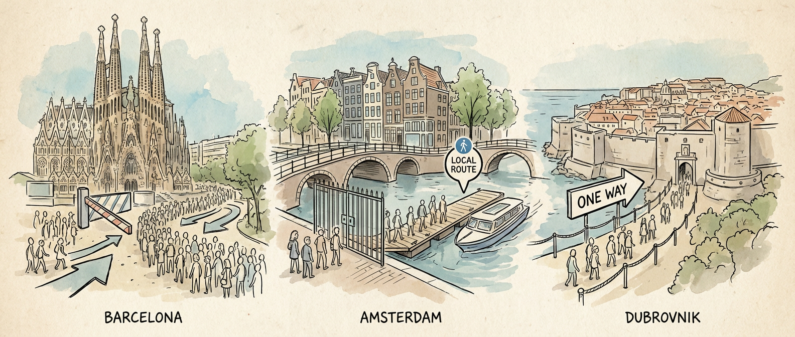
The Numbers Are Getting Impossible to Ignore
I’ve been traveling for fifteen years, and I’ve never seen cities move this fast against tourism. The shift from “how do we attract more visitors” to “how do we make them stop coming” has happened in what feels like a blink. The data backing this up is stark: a 2025 study by the UNWTO found that 72 percent of residents living in European cities overwhelmed by tourism now report that visitor numbers are actively damaging their quality of life. That’s not a gentle concern. That’s a majority of people living in these places saying their daily existence has gotten worse. Six years ago, that number was 54 percent. This isn’t gradual frustration. This is acceleration.

The frustration makes sense when you walk through Barcelona’s Gothic Quarter on a Tuesday afternoon and count more selfie sticks than actual residents. Or when you try to buy bread in Amsterdam and the line at the bakery is half tourists looking for an Instagram moment. These cities aren’t quaint anymore to the people who actually live there. They’re theme parks where housing costs have tripled and your neighbors change every three nights.
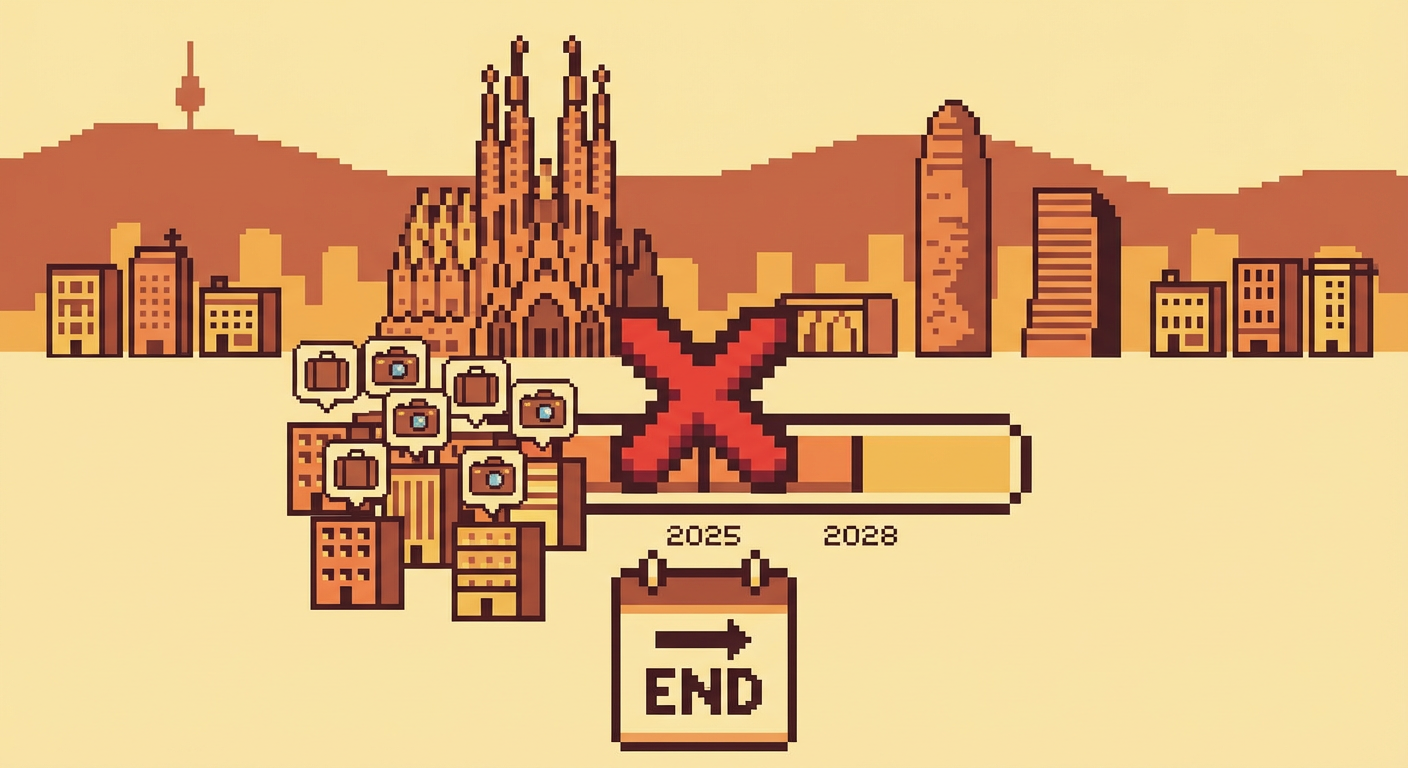
Barcelona Is Making Airbnb Irrelevant by 2028
Barcelona’s move is the boldest I’ve tracked. In November 2024, the city council voted to eliminate all 10,101 licensed tourist apartments by 2028. This isn’t a cap or a tax. This is elimination. Enforcement is already rolling out in phases through 2025 and 2026, which means if you were planning to book an apartment there in 2026, your options are already shrinking. Fast. Those licensed units aren’t being redirected to long-term rentals. They’re being delisted. Gone.
What does this mean for you as a traveler? Hotels are about to get very expensive, or you stay further out and lose the convenience you were probably paying for in the first place. The displacement is real. Barcelona isn’t trying to redistribute tourism. It’s trying to make it more expensive and inconvenient, which is blunt, and it works. I spent four days there in early 2025, and I noticed it already. Hotel room prices had jumped noticeably compared to my visit two years prior. The city council knows exactly what they’re doing: they’re pricing out the casual visitor.
Amsterdam, Venice, and Dubrovnik Are Using Every Lever
Amsterdam went after money. The city raised its tourist overnight tax to 12.5 percent of accommodation costs in 2024, now the highest municipal tourist tax rate in Europe according to Euromonitor International’s 2025 urban tourism report. That’s not buried in fine print. That’s a visible surcharge on your hotel bill. For a 200-euro hotel room, you’re adding 25 euros just in tax. It stacks fast.
Venice took a different approach. The city launched a day-tripper entry fee pilot in April 2024 at five euros per person on peak days. In its first season, the system collected over 2.4 million euros. The numbers worked, so they expanded it. In 2025, the fee covers 54 designated peak days annually. You can check Venice day entry fee official information portal for the schedule. The fee doesn’t stop tourism. It funds it. That money goes to infrastructure and restoration. But it also makes casual day-trippers think twice, which is partly the point.
Dubrovnik went nuclear. They enforced a strict daily visitor cap of 4,000 tourists in the Old City during peak season 2025. Before 2017, there was no cap at all, and numbers regularly exceeded 10,000 per day. Four thousand. That’s not a gentle reduction. That’s more than halving traffic. Once 4,000 people have entered for the day, no one else gets in until the next morning. I know someone who showed up at 2 p.m. last July and was turned away. She drove 90 minutes back and didn’t get to see the city. That’s the point of a cap. You’re not managing tourism. You’re rationing it.
The Honest Question You Should Ask Yourself
Here’s where I’m supposed to give you a moral verdict, and I’m not going to. The complexity is real, and ignoring it feels dishonest. These cities needed to act. Residents are being pushed out by rising rents. Infrastructure is failing under the weight. The places you want to visit are becoming unlivable for the people who actually need to live there. That’s not acceptable. But the solutions being deployed also mean that travel is getting more gatekept and expensive, which sucks if you’re saving for months to take a trip.
I don’t have a clean answer. What I have is a question for you: Are you okay with paying more and planning further in advance because millions of travelers before you showed up with no regard for how their presence affected the places they were visiting? Because that’s the trade-off. These restrictions exist because tourism broke these cities. The current restrictions are how cities are trying to fix that. You’re paying the price now because the pricing should have existed five years ago.
For research on the broader context and how cities are approaching this, the UNWTO overtourism research and policy resources site has detailed policy frameworks and case studies from dozens of cities working through this exact problem.
What This Means for Your Travel Plans in 2026
If you’re traveling to these cities next year, book earlier. Book hotels instead of apartments. Budget for taxes and fees you didn’t expect. Go during shoulder season if you can, because peak season is becoming actively restrictive. And honestly, consider going somewhere else. There are thousands of places that aren’t at their breaking point yet. Supporting those destinations might be the more ethical choice, and it’ll definitely be less stressful for you.
This shift is real and it’s speeding up. More cities are watching Barcelona, Amsterdam, Venice, and Dubrovnik to see how these restrictions actually play out long-term. Tokyo is watching. If Barcelona can do it, why not other cities drowning in visitors? The question isn’t whether more restrictions are coming. It’s when and how aggressive they’ll be.
I’m curious what you think about all this. Have you traveled to any of these cities recently and noticed the changes? Does the idea of entry caps and expanded fees change how you plan trips? Drop a note in the comments. I read everything and I’m genuinely interested in how travelers are actually responding to this shift, not what the theory says they should do.